HVAC Website Redesign Case Study: Protecting Traffic During Migration
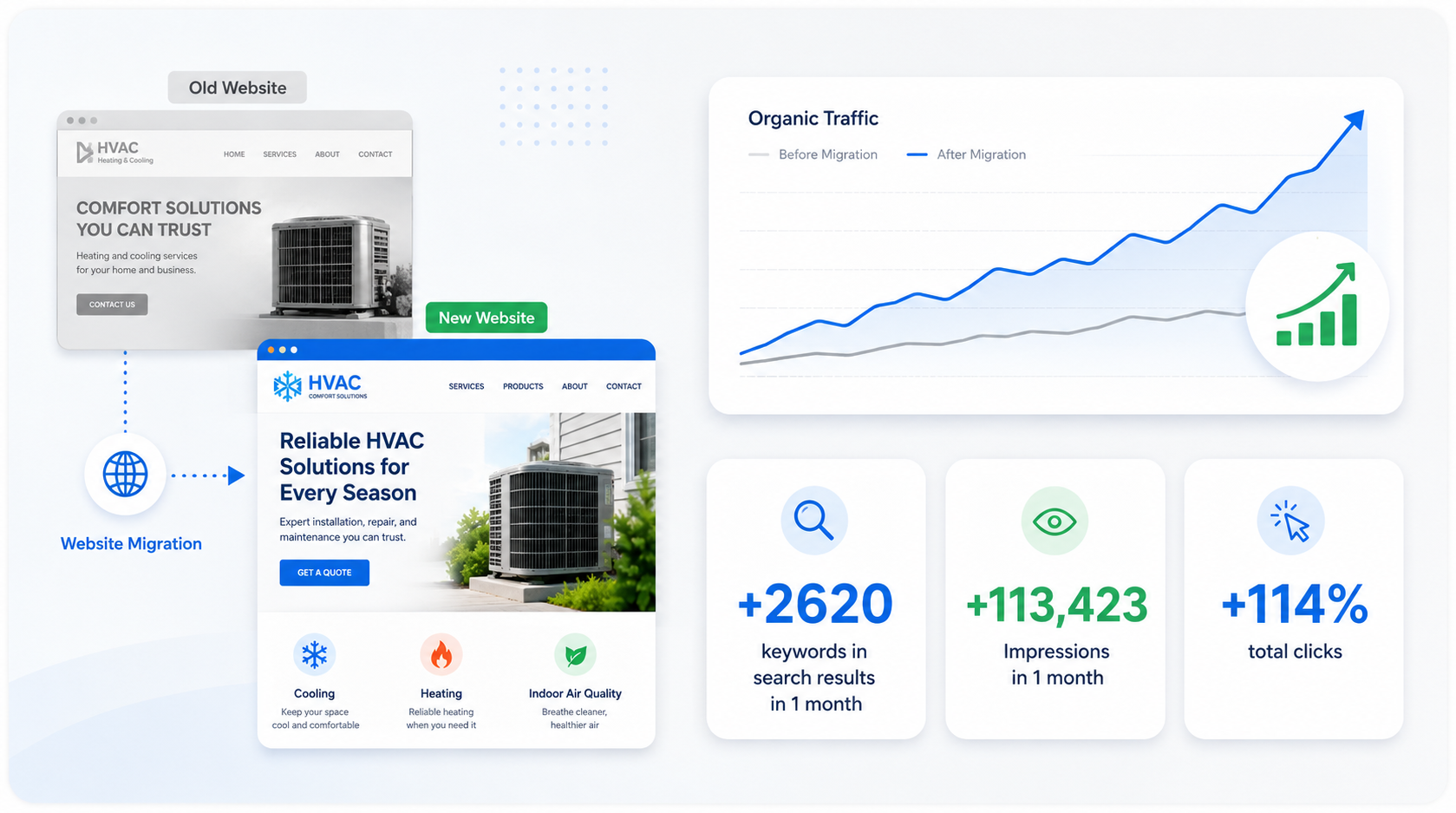
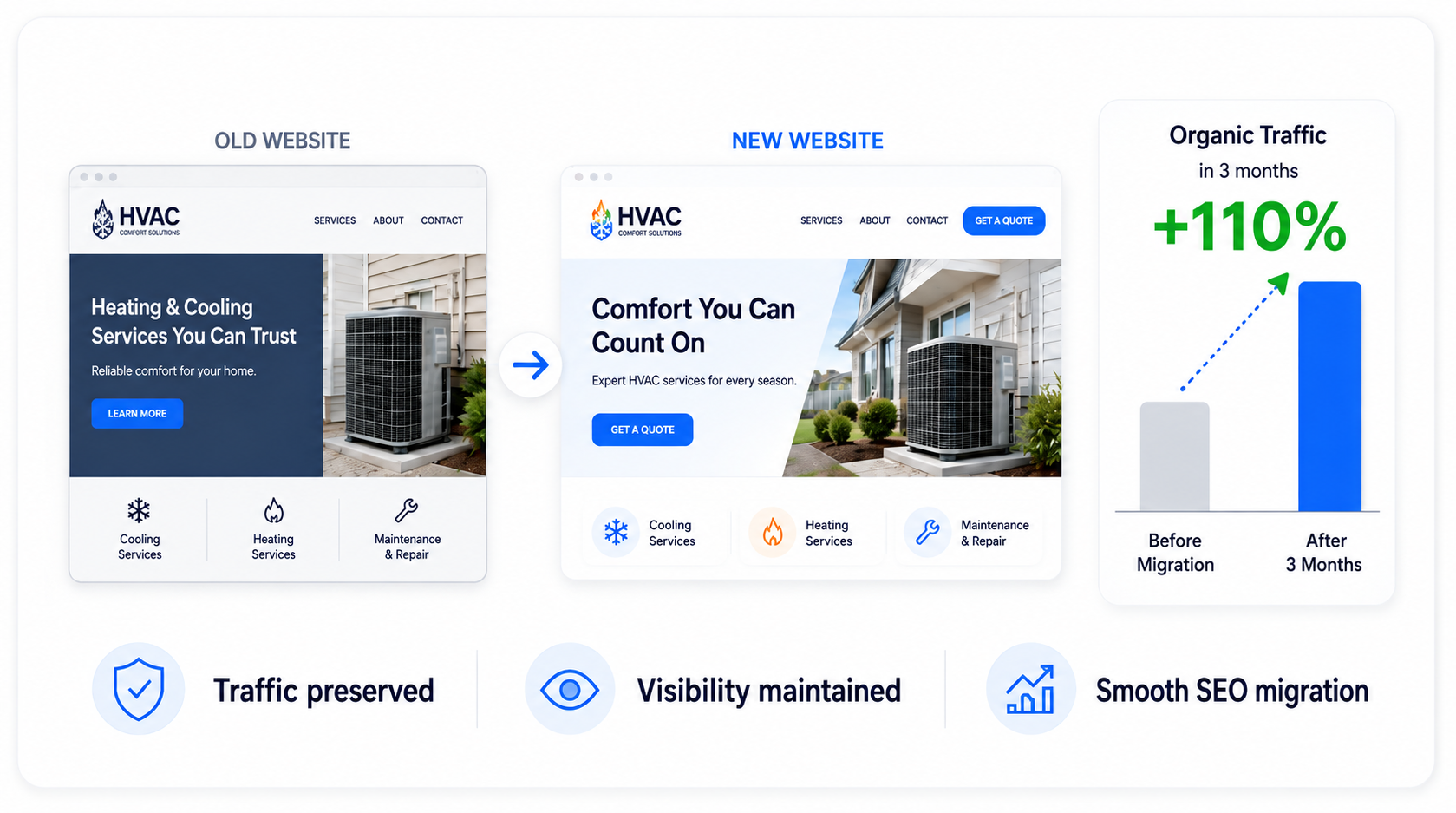
organic traffic in 3 months
About the Project
Industry:
- HVAC services
Goal:
- Preserve organic traffic and search visibility following an HVAC website redesign and migration.
Result:
- Switching to a new website design risks losing conversions and significant traffic. Handling the website migration SEO process with care is crucial to avoid this. A detailed working plan should be formulated and strictly followed, especially when providing SEO consulting services.
This is exactly what we did for our HVAC client. By carefully planning and monitoring each stage of the migration, we not only avoided a significant traffic decline but also achieved a slight increase in organic visitors.
The Challenge
Despite the potential benefits of a website redesign, the primary challenge in this HVAC website migration was to transition to the new design while preserving the website’s existing organic traffic and search visibility.
The website ranked for numerous HVAC-related queries, including searches for services and local service areas. Losing these rankings could have resulted in fewer organic leads, calls, and service requests.
The key challenges included:
- Preserving existing organic traffic and keyword rankings.
- Maintaining the visibility of important HVAC service pages.
- Ensuring that existing URLs and their SEO value were properly preserved.
- Preventing technical issues from affecting crawling and indexing.
- Minimizing disruption to organic performance during and after the redesign.
Execution / Optimization Process
In general, the action plan looked like this:
Site performance indicators monitored:
- Traffic.
- Keyword positions.
- Clicks, impressions, and CTR stats for top pages.
- Device stats (PC/mobile/tablet).
Pre-migration technical and SEO checks:
- Performing a complete website audit.
- Creating a backup for quick rollbacks in case of sudden drops.
Technical audit of the new HVAC website:
- Robots.txt and sitemap.xml files.
- Site structure (URL).
- Meta tags.
- Images and attributes such as Alt and Title.
- Analysis of important pages such as the Home page, Contacts, About, etc.
- Content on pages.
- The structure of headings H1 – H6
- Mobile site menu.
- Rel = “canonical” attributes.
- Breadcrumbs.
- Microdata.
- Checking the main menu and filters on the site.
- Favicon.
- Page 404.
- Download speed.
- Cross-browser compatibility.
- The main site mirror and 301 redirects.
- Optimization for mobile devices.
- HTTPS.
- “Up” button, codes of connected online chats, and callback services.
- Checking the performance of all forms, services, and scripts used on the website.
- Transfer of codes of analytics systems.
Particular attention was paid to the HVAC service pages and local/service-area pages, as these pages were important sources of organic visibility and potential leads.
The Results
It is impossible to completely eliminate the traffic drop and predict the search engine’s reaction to the new design.
However, careful preparation and continuous monitoring allowed us to minimize the risks associated with the migration.
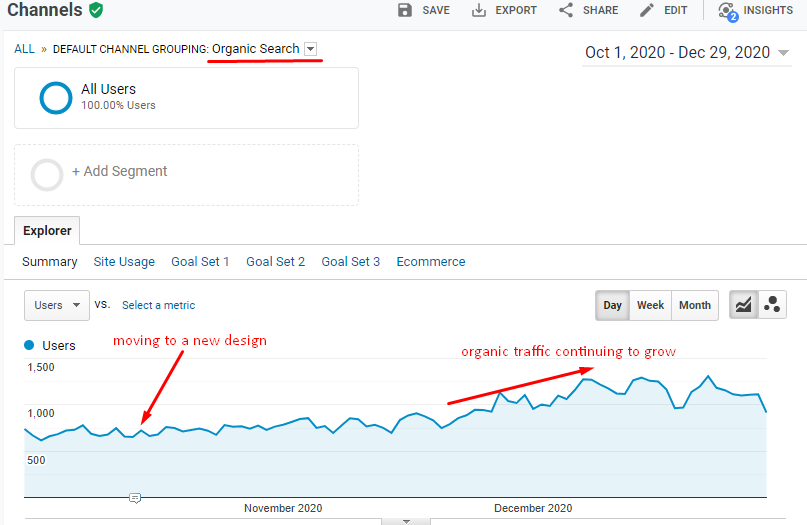
Instead of experiencing a significant loss of organic traffic, the HVAC website maintained its search visibility and even achieved a slight increase in organic visitors.
The results demonstrate the importance of incorporating SEO into an HVAC website redesign before the new website goes live, rather than trying to recover rankings after problems occur.
Traffic statistics for 3 months:
Summary / Conclusion Takeaways
- Document Main Stats Before Migration: Before redesigning or migrating an HVAC website, it’s crucial to document and analyze critical statistics such as traffic, keyword positions, and engagement metrics to establish a baseline for comparison.
- Address Technical SEO Issues: Conduct a thorough SEO audit to identify technical issues that may affect the website’s performance post-migration. Develop a list of technical tasks with clear statuses, deadlines, and comments to ensure efficient resolution of these issues.
- Monitor Performance Regularly: Implement a monitoring system to track traffic, keyword positions, and errors in platforms like Google Search Console immediately after the migration. Daily monitoring allows for prompt identification and resolution of any issues.
- Evaluate Performance Post-Migration: Evaluate the website’s performance after the migration by comparing key SEO metrics with the pre-migration baseline. Review traffic, rankings, clicks, impressions, CTR, indexed pages, and conversions to determine whether the migration successfully preserved organic performance. For an HVAC company, this analysis should also focus on whether service and location pages continue to generate organic visibility and leads.
By following these key takeaways, HVAC companies can significantly manage the website migration process and minimize the risk of traffic loss while maximizing the potential for success.
Explore more case studies
Check out our real-life Case Studies, that demonstrating the solid results we’ve achieved for our clients.

Do you want to achieve significant business growth?